
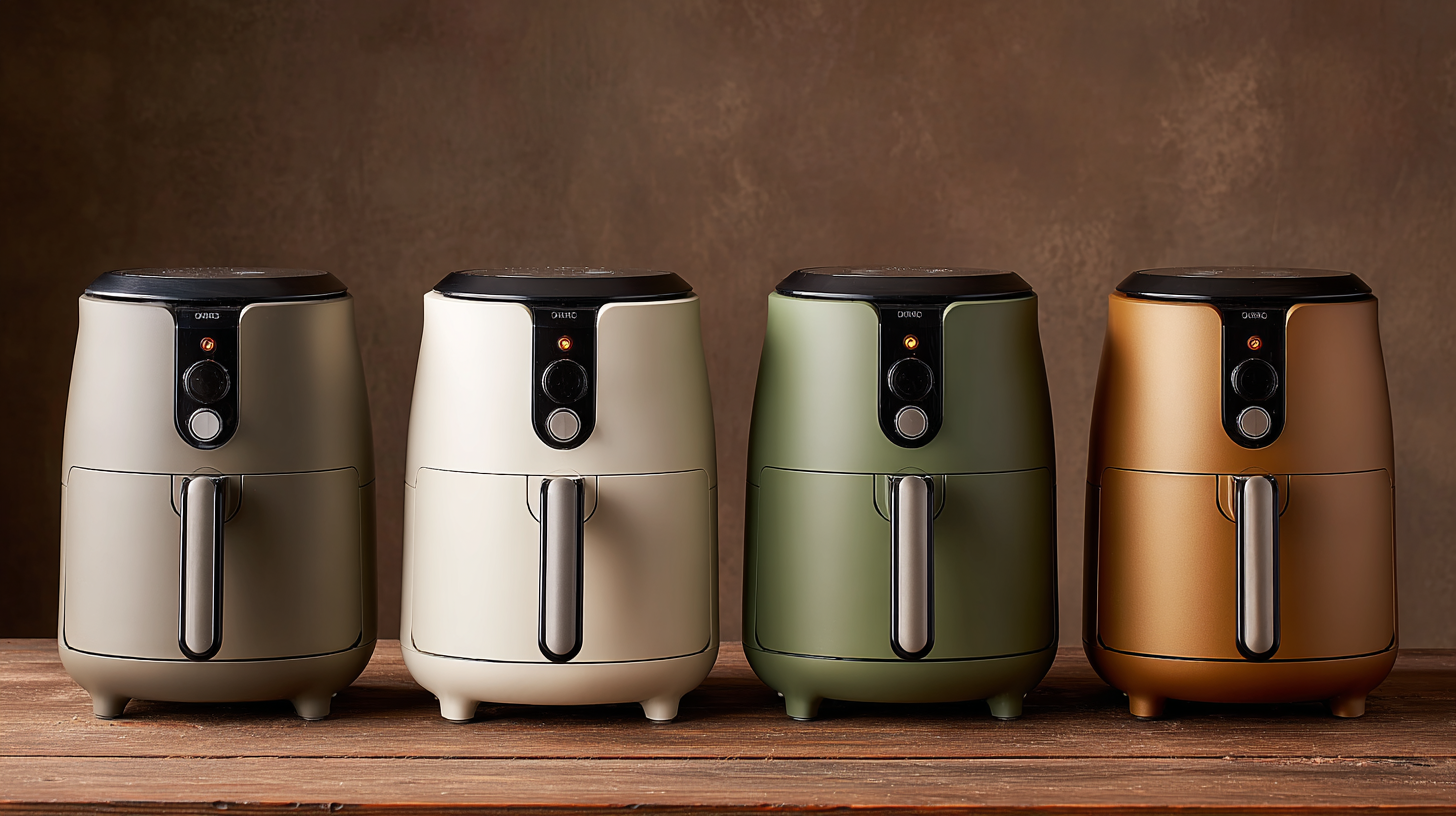
If you haven’t bought an air fryer yet, you’re probably one of the last people in your friend group who hasn’t. These things have gone from trendy kitchen gadget to genuine countertop staple in the span of a few years, and for good reason. They cook food faster than a conventional oven, they get things crispy with a fraction of the oil you’d need for deep frying, and they’re surprisingly versatile once you get past the “frozen fries and chicken nuggets” phase.
The market in 2026 is flooded with options though. There are basic single-basket models for $40, dual-basket setups for families, smart models with Wi-Fi, glass-bowl designs, and units that double as pressure cookers and dehydrators. Picking the right one comes down to how you actually cook, how many people you’re feeding, and how much counter space you’re willing to give up.
How Air Fryers Actually Work
Despite the name, air fryers don’t fry anything. They’re small convection ovens with powerful fans that circulate hot air around food at high speed. That rapid airflow is what creates the crispy exterior that mimics deep frying. You still use a little oil, usually a tablespoon or so, but compared to submerging food in a quart of hot oil, the difference in fat and calories is significant.
They also preheat in minutes rather than the 10 to 15 minutes a full-size oven takes, and they cook most foods 20 to 30 percent faster. Because the cooking chamber is small, the heat is concentrated and efficient. For reheating leftovers, they’re dramatically better than a microwave because you get crispy texture back instead of soggy, rubbery results.
Instant Vortex Plus 6-Quart
The Instant Vortex Plus has been the top pick at America’s Test Kitchen and multiple other testing outlets for a couple of years running, and the 2026 model continues to earn that spot. It’s a drawer-style air fryer with a 6-quart basket that comfortably fits enough food for three to four people. The digital touchscreen is intuitive, with presets for common foods and manual controls for custom cooking.
In testing, it produces evenly cooked food with consistent browning on chicken, fries, vegetables, and baked goods. The basket slides out like a drawer and is easy to clean, and the overall build quality is solid without feeling overly bulky on the counter. It typically sells for around $90 to $110, which puts it in the sweet spot of good performance without premium pricing. If you want one air fryer that does the basics really well without any unnecessary complexity, this is the one.
The upgraded version, the Instant Vortex Plus ClearCook with OdorErase, adds a glass viewing window so you can see your food while it cooks without opening the basket and releasing heat. It also has a built-in odor filter that reduces cooking smells. These are nice additions but not essential. The base Vortex Plus without the window is the better value for most people.
Cosori TurboBlaze 6-Quart
Cosori has been quietly building a reputation as one of the most reliable air fryer brands, and the TurboBlaze is their best model. It earned top marks in testing by the Today show, receiving perfect scores for air frying chicken and fries, roasting potatoes, ease of cleaning, noise level, and ease of use. The only category where it dipped was baking cookies, which is a minor concern since most people aren’t buying an air fryer to bake.
The touchscreen is responsive and clearly labeled, the basket has a nonstick ceramic coating that cleans up easily, and it operates at a very reasonable noise level. It comes with functions for air frying, roasting, broiling, baking, reheating, dehydrating, and proofing dough. The 6-quart capacity is enough for a family without being so large that it dominates your counter. Pricing hovers around $80 to $100, and Cosori offers a 2-year warranty, which is longer than most competitors.
Ninja Foodi DZ550 Dual-Basket
If you’re cooking for a larger family or want the ability to cook two different foods simultaneously, a dual-basket air fryer changes the game. The Ninja Foodi DZ550 has a 10-quart total capacity split between two independent baskets. You can cook chicken in one side and vegetables in the other at different temperatures and different times, and the Smart Finish feature automatically adjusts so both sides finish at the same moment.
This is genuinely useful for weeknight dinners where you want a protein and a side ready at the same time without babysitting two separate cooking processes. The Match Cook feature lets you mirror settings across both baskets when you want identical cooking on both sides, which is great for large batches of the same food.
The downside is size. This thing is big. It needs a dedicated spot on your counter, and it won’t fit easily in most cabinets. If you have a small kitchen, this probably isn’t practical. But for families with the counter space who use their air fryer daily, the dual-basket format is worth the trade-off. Pricing runs around $150 to $180.
Ninja Crispi (Glass Bowl)
The Ninja Crispi is the most interesting new design in the air fryer market for 2026. Instead of a traditional metal basket with a nonstick coating, it uses a high-tempered glass bowl. This addresses a growing concern among health-conscious buyers about PFAS chemicals found in some nonstick coatings. The glass bowl is completely free of those chemicals and doubles as a serving dish and storage container since it comes with a leak-proof lid. You can go from air frying to the dinner table to the fridge with a single dish.
In testing, the glass holds heat more evenly than thin metal baskets, producing consistent results. Cleaning is simpler too since food slides off glass more easily than it comes off metal mesh. The trade-off is weight. The glass bowl is noticeably heavier than a standard basket, so this works best as a countertop permanent fixture rather than something you pull in and out of a cabinet. Pricing sits around $80 to $120.
Dash Tasti-Crisp (Budget Pick)
If you’re not sure whether you’ll actually use an air fryer regularly and don’t want to spend much finding out, the Dash Tasti-Crisp is the cheapest option worth buying. It’s a no-frills, 2.6-quart basket air fryer that does one thing well: it cooks food with hot air. No digital screen, no presets, no app, no Wi-Fi. Just a temperature dial and a timer.
Despite the simplicity, it’s one of the highest-rated air fryers in Consumer Reports’ testing. It fits on almost any counter with a footprint of less than a square foot, and at roughly $40 to $60, it’s an easy impulse buy. The small capacity means it’s really designed for one or two people. You’re not cooking a family dinner in this thing. But for single servings of fries, chicken tenders, or reheating last night’s pizza, it gets the job done surprisingly well.
Philips Airfryer 3000 Series
Philips was one of the original air fryer pioneers and they still make excellent products. The 3000 Series is a dual-basket model that competes directly with the Ninja dual-basket lineup. In testing, it produced some of the best-looking and best-tasting food, particularly with whole chicken and dehydrated fruits, where it outperformed most competitors.
Philips air fryers tend to run a little more expensive than comparable Ninja or Cosori models, but the build quality is noticeably solid and the cooking results are consistently at or near the top in side-by-side tests. If you’ve used a Philips air fryer before and liked it, the 3000 Series is a worthy upgrade. If you’re a first-time buyer shopping on value, the Cosori or Instant Vortex gives you 90% of the performance at a lower price.
What to Know Before You Buy
Size matters more than you think. A 4-quart air fryer is fine for one or two people but will frustrate a family of four because you’ll have to cook in batches. A 6-quart model handles most family meals. An 8 or 10-quart dual-basket covers large families and entertaining. But bigger also means more counter space, so measure before you buy.
Don’t overcrowd the basket. This is the number one mistake people make. Air fryers work by circulating hot air around food. If you pile food on top of itself, the air can’t reach everything and you end up with crispy pieces on top and soggy ones underneath. A single layer with a little space between pieces gives the best results. If you need to cook more food than fits in one layer, do it in batches.
Temperature accuracy varies. Consumer Reports found that some air fryers registered temperatures as much as 67 degrees lower or 25 degrees higher than the set temperature. Only about a quarter of the models they tested landed within 5 degrees of the target. This means you might need to adjust cooking times or temperatures from what a recipe calls for. After a few uses, you’ll learn your specific machine’s quirks.
Shake or flip food halfway through cooking. Most air fryers heat from the top, which means the side of the food facing up gets more direct heat than the bottom. Flipping or shaking the basket midway through cooking ensures even browning on all sides. Some models have a reminder alarm built in for this.
Cleaning is easier than you’d expect. Most baskets are dishwasher safe or can be wiped out with a damp cloth and a little dish soap. The key is to clean it while it’s still warm but not hot. Letting grease cool and harden makes cleanup harder. A quick wipe after each use keeps the basket in good shape and prevents buildup that can cause smoke.