


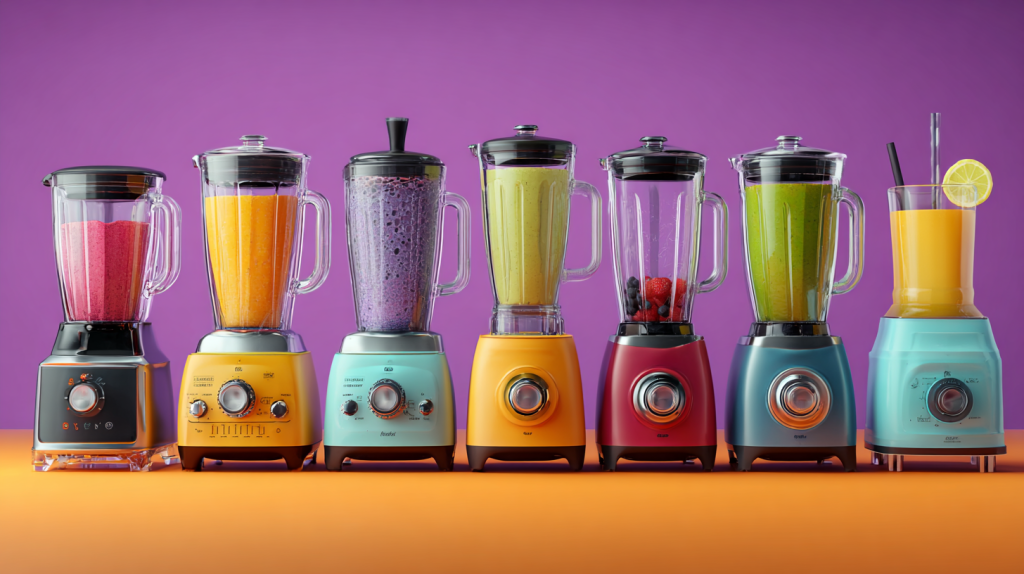
A good blender does way more than make smoothies. It purees soup into something silky, turns raw cashews into cream sauce, crushes ice for frozen drinks, makes salad dressings in 30 seconds, and blends pesto better than any food processor. It’s one of those kitchen tools that sits on the counter and gets used almost daily once you realize how much it can do.
The problem is the market ranges from $30 machines that can barely handle a banana to $700 professional-grade units with the horsepower of a lawn mower. The right blender depends on what you’re actually using it for, how often, and how much you’re willing to spend. Here’s what’s worth buying at every level.
What Separates a Good Blender From a Bad One
Motor power is the most obvious difference, but it’s not the whole story. A powerful motor (measured in watts or peak horsepower) determines whether your blender can handle tough ingredients like frozen fruit, ice, raw nuts, and fibrous greens without leaving chunks behind. Budget blenders typically run 300 to 700 watts. Mid-range models hit 1,000 to 1,200 watts. High-performance blenders push 1,400 watts and above.
Blade design matters just as much as motor power. Some blenders use a single blade cluster at the bottom of the jar that can leave ingredients stuck above the blades. Others, like Ninja’s stacked blade system, place multiple blade tiers throughout the jar so food gets pulled through the blades more evenly. The material and sharpness of the blades affect how finely ingredients get broken down, which is the difference between a smooth smoothie and one with gritty bits of kale floating in it.
The jar material is another consideration. Plastic jars are lighter and won’t shatter if you drop them, but they can absorb stains and odors over time, especially from turmeric, beets, and tomato-based recipes. Glass jars look nicer and don’t stain, but they’re heavier and not ideal for high-speed blending because the weight adds stress to the motor coupling. Most high-performance blenders use Tritan copolyester, which is BPA-free, stain-resistant, and virtually unbreakable.
Vitamix E310 Explorian
The Vitamix E310 is the best blender most people can buy. It’s the entry point into the Vitamix lineup, which means it’s significantly cheaper than their flagship models while delivering the same core performance. In testing, it produces chunk-free smoothies from frozen fruit in about 80 seconds, turns roasted almonds into smooth butter, and purees soup to a velvety consistency that no mid-range blender can match.
The variable speed dial gives you precise control from a gentle stir to full power, and the included tamper lets you push thick mixtures down toward the blades without stopping the motor. This is a critical feature for things like nut butter, thick smoothie bowls, and hummus where ingredients tend to create an air pocket above the blades. The 48-ounce jar is slightly smaller than some competitors but fits comfortably under most kitchen cabinets.
At around $350, it’s not cheap. But Vitamix blenders are built to last. They come with a five-year warranty, and many owners report using theirs daily for a decade or more without issues. Consumer Reports rates Vitamix as the most reliable blender brand with the highest owner satisfaction. If you divide the cost by years of daily use, it’s one of the better values in kitchen equipment. Professional chefs consistently name Vitamix as their top recommendation for home kitchens, specifically because of the soup and sauce capabilities that cheaper blenders simply can’t replicate.
Ninja Professional Plus BN801
The Ninja Professional Plus Kitchen System is the best mid-range option, especially for families that want versatility. It’s a full-sized blender that also comes with a personal blender attachment and a food processing bowl, giving you three appliances in one. Consumer Reports rates it as one of their highest-scoring personal blenders overall, with excellent marks for smoothies, pureeing, and durability.
Ninja’s signature stacked blade design pulls ingredients through multiple cutting planes, which means less stopping to scrape down the sides compared to single-blade blenders. It handles frozen fruit, ice, leafy greens, and protein powder without leaving chunks. The 72-ounce pitcher is large enough for family-sized batches, and the included personal cups are great for single-serve smoothies you can take on the go.
At around $120 to $160, the Ninja offers roughly 85 to 90 percent of the Vitamix’s blending performance at less than half the price. Where it falls short is in the ultra-smooth texture department. Side by side, a Vitamix produces slightly silkier results with fibrous ingredients like raw kale or ginger. For most people making standard smoothies, soups, and sauces, the difference is marginal. The build quality is also a step below Vitamix, with more plastic components and a shorter warranty.
NutriBullet Combo
The NutriBullet Combo bridges the gap between personal blenders and full-sized machines. It comes with a 64-ounce full-size pitcher and smaller personal blending cups, so you can make a big batch for the family or a single serving for yourself. In testing, its blending power is surprisingly close to the Vitamix for smoothies and soups, producing smooth, chunk-free results with frozen fruit and leafy greens.
Where it struggled slightly was with nut butter, needing more blending cycles than the Vitamix to achieve a fully smooth consistency. But for the vast majority of daily blending tasks, it performs well above its price point. The controls are simple with five speed settings plus pulse, and cleanup is straightforward. At around $100 to $130, it’s excellent value for households that blend regularly but don’t want to invest in a Vitamix.
NutriBullet Original (Budget Pick)
If you just want a simple personal blender that makes one smoothie at a time without taking up much counter space, the original NutriBullet is still a solid choice in 2026. At around $50 to $60, it’s one of the most affordable blenders that actually performs well. Consumer Reports gave it excellent ratings for ice crushing, smoothies, pureeing, and durability, which is remarkable for a machine at this price.
The 600-watt motor handles standard smoothie ingredients without issue. Frozen berries, bananas, spinach, protein powder, and milk all blend into a smooth drink in about 45 seconds. It struggles with very hard ingredients like raw almonds or dense frozen chunks, so you’ll want to use softer frozen fruits and break up anything really solid before blending. The blend-in-the-cup design means less cleanup since the blending jar doubles as your drinking cup. For single people or anyone who just wants a quick morning smoothie without pulling out a full-sized blender, this is the best value available.
Beast Mega 1200 Plus
The Beast Mega 1200 Plus is the newcomer getting a lot of attention in 2026, and for good reason. It’s positioned as a premium personal blender that punches into full-sized blender territory. The design is sleek and modern, it comes in multiple colors, and the newest version offers a stainless steel blending jar for people who want to avoid all plastic contact with their food.
What sets it apart is the noise level. The Beast is significantly quieter than most blenders at comparable power levels. If you blend early in the morning while others are sleeping, or you live in an apartment with thin walls, this matters. Performance-wise, it produces silky smooth results with standard smoothie ingredients and handles thicker blends like acai bowls and pureed soups well.
The system comes with three jar sizes: a 17-ounce jar for small batches like dressings and dips, a 33-ounce jar for single smoothies, and a 40-ounce jar for family-sized blends or soups. At around $200 to $250, it sits between the NutriBullet Combo and the Vitamix in both price and performance. It’s the right pick for someone who values design, quiet operation, and non-toxic materials and is willing to pay a premium for those things.
Braun MultiQuick 5 (Best Immersion Blender)
If you make a lot of soups and sauces, an immersion blender deserves a spot in your kitchen alongside or even instead of a countertop blender. An immersion blender, also called a stick blender or hand blender, lets you blend directly in the pot. No transferring hot soup to a countertop blender in batches, no risk of steam blowing the lid off, and no extra container to clean.
The Braun MultiQuick 5 is the standout in this category. It has a powerful motor in a comfortable ergonomic grip, a long stainless steel shaft that reaches into deep pots, and it handles hot soup and frozen smoothies equally well. In testing, it pureed hot soup in about 30 seconds and produced a smooth icy green smoothie in under a minute. It comes with a whisk attachment and a blending cup, adding versatility beyond just soup duty.
At around $50 to $70, it’s an affordable addition to any kitchen and takes up virtually no storage space. For anyone who regularly makes pureed soups, sauces, or baby food, it’s arguably more useful day to day than a full-sized countertop blender.
How to Get the Best Results From Any Blender
Add liquids first. Whether it’s water, milk, juice, or yogurt, putting the liquid in the bottom of the jar helps the blades spin freely and pull solid ingredients down. Dropping frozen fruit onto dry blades is how you get that frustrating air pocket where everything spins but nothing actually blends.
Don’t overload the jar. Most blenders work best when the jar is half to two-thirds full. Filling it to the top restricts the vortex that pulls ingredients through the blades, leading to uneven blending and the need to stop and scrape down the sides repeatedly.
Start on low speed and work up. Slamming the blender straight to high with a jar full of frozen chunks stresses the motor and often causes ingredients to fly up and get stuck above the blades. Start slow to break things down, then increase speed for the final blend.
Use the tamper if your blender has one. For thick blends like smoothie bowls, nut butter, and hummus, a tamper is the difference between a smooth result and a frustrating experience of stopping, scraping, and restarting over and over. If your blender doesn’t have a tamper, you can remove the lid plug and use a wooden spoon carefully, but a purpose-built tamper is safer and more effective.
Clean immediately after use. Add warm water and a drop of dish soap, blend on low for 30 seconds, and rinse. This takes less than a minute and prevents staining and residue buildup. Letting smoothie or soup remnants dry in the jar makes cleanup dramatically harder.