


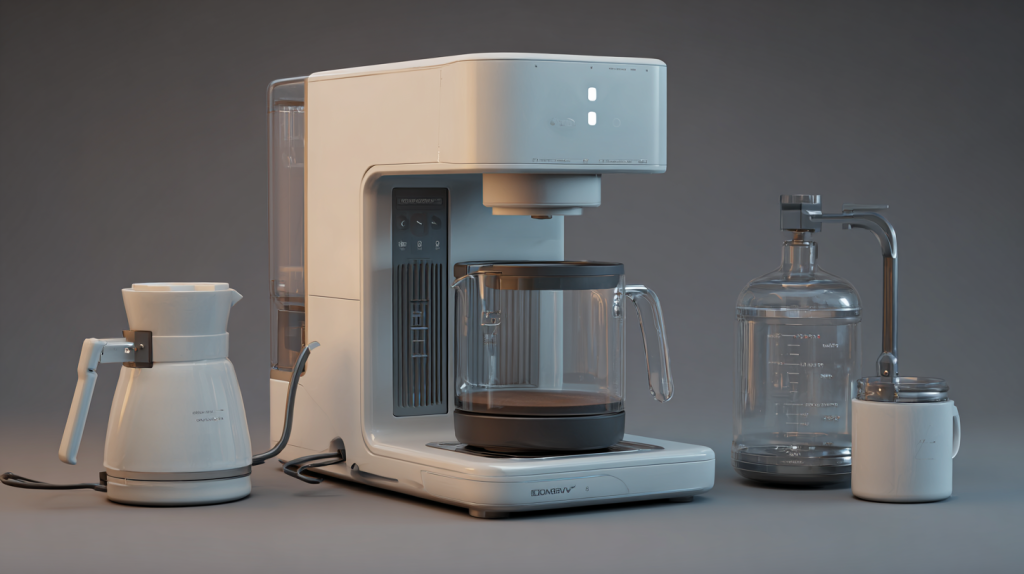
Coffee is one of those daily rituals where the quality of your equipment makes a real difference in the quality of your morning. A bad coffee maker doesn’t just make bad coffee. It makes you spend $6 at a coffee shop on the way to work because what came out of your machine at home wasn’t worth drinking. Over a year, that’s easily $1,500 in coffee shop spending that a $100 to $200 machine could have prevented.
The coffee maker market in 2026 spans everything from $30 basic drip machines to $2,000 fully automatic espresso systems. The good news is that you don’t need to spend anywhere near the top of that range to get genuinely great coffee at home. Here’s what’s actually worth buying at every price point and for every brewing style.
Understanding What Makes Coffee Taste Better
Before getting into specific machines, it helps to understand the two things that matter most for coffee quality: water temperature and grind freshness. The Specialty Coffee Association certifies that the ideal brewing temperature is between 195 and 205 degrees Fahrenheit. Cheap coffee makers often can’t reach or maintain that range consistently, which leads to under-extracted, flat-tasting coffee. More expensive machines control temperature with greater precision, and you can taste the difference.
The other factor is grinding your beans fresh. Pre-ground coffee from a bag starts losing flavor almost immediately after grinding. A good burr grinder paired with a decent coffee maker will produce better results than the most expensive machine in the world using stale pre-ground beans. If you’re only going to make one upgrade to your coffee setup, buy a burr grinder before upgrading your machine. A Baratza Encore runs about $150 and is the most commonly recommended entry-level grinder for a reason.
Best Drip Coffee Makers
Drip machines are the workhorse of American kitchens. You load the filter, add grounds and water, press a button, and walk away. They brew enough for a household of coffee drinkers and keep it hot for hours. Here are the standouts at different price points.
The Technivorm Moccamaster KBGV is the gold standard for drip coffee and has been for years. It’s SCA certified, meaning it hits that perfect brewing temperature consistently. It brews a full 10-cup pot in about six minutes thanks to a powerful 1400-watt heating element. The showerhead design distributes water evenly over the grounds, mimicking a manual pour-over technique that extracts maximum flavor. Every unit is handmade in the Netherlands and backed by a five-year warranty with a lifetime repair guarantee.
At around $350 to $370, it’s expensive for a drip machine. But the combination of exceptional coffee quality, build quality that lasts decades, and the warranty makes it arguably the best value long-term purchase on this list. You’re not replacing this machine in two years like you would a cheaper one. It also comes in more than 20 colors, which is a nice touch if your kitchen aesthetic matters to you.
The OXO Brew 9-Cup is the best mid-range option for people who want SCA-certified brewing quality without spending Moccamaster money. It uses a rainmaker showerhead for even water distribution, brews into a double-walled thermal carafe that keeps coffee hot without a hot plate, and has a simple one-dial interface that makes it completely foolproof. Pricing lands around $170 to $200. If you drink black coffee and want to actually taste the nuances of good beans, the OXO delivers that clarity.
The Ninja CE251 12-Cup Programmable is the budget pick that punches above its weight. At around $70 to $90, it offers features you’d normally find on machines twice the price, including a removable water reservoir, delayed brew timer, and both Classic and Rich brew strength settings. The coffee isn’t going to match the Moccamaster or OXO in flavor clarity, especially with lighter roasts, but for everyday brewing with medium to dark roast beans it’s perfectly solid. The programmable timer is great for waking up to a fresh pot already brewed.
The Fellow Aiden Precision Coffee Maker is for the serious coffee nerd who wants to dial in every variable. It offers the widest temperature range of any drip brewer at 122 to 210 degrees in 0.1-degree increments, plus adjustable bloom time, flow rate, and brew ratio. You can save custom profiles for different beans and switch between them with a clean digital interface. At around $350, it competes with the Moccamaster on price but offers far more control for people who enjoy experimenting. The trade-off is a smaller 40-ounce max capacity, which might not be enough for larger households.
Best Single-Serve Machines
If you’re the only coffee drinker in your household or you just want one quick cup without brewing a full pot, single-serve machines make sense.
The Keurig K-Elite is the most practical choice for people who value speed and simplicity above all else. Pop in a K-Cup pod, press a button, and you have coffee in under a minute. It offers five cup sizes, a strong brew setting, and an iced coffee function. It’s not going to win any awards for coffee quality compared to a drip machine with fresh-ground beans, but for sheer convenience it’s hard to beat. Pricing sits around $150 to $170.
The Nespresso Essenza Mini is the better option if you prefer espresso-style drinks. It uses Nespresso capsules to produce concentrated shots that are noticeably smoother and more complex than anything a K-Cup produces. The machine is tiny, fast, and consistent. The trade-off is that Nespresso pods cost more per cup than K-Cups, and the environmental waste from capsules is a valid concern, though Nespresso does have a recycling program. The machine runs about $150 to $170.
Best Espresso Machines
Home espresso is a different world from drip coffee. The machines are more expensive, the learning curve is steeper, and the results are highly dependent on your grinder and technique. But if your daily order is a latte, cappuccino, or straight espresso, making it at home saves a staggering amount of money over time.
The Breville Barista Express is the most popular entry point into home espresso. It has a built-in conical burr grinder, a 15-bar Italian pump, a steam wand for frothing milk, and enough manual control to let you learn the craft of pulling good shots. It occupies that sweet spot where it guides you enough to succeed as a beginner but gives you enough control to grow into it. Pricing runs around $600 to $700.
The De’Longhi La Specialista Opera is the pick for someone who wants excellent espresso with more hand-holding. It guides you through the process with a more intuitive interface than the Breville, and testers found that it produced consistently rich shots with less trial and error. It also has a cold brew function, which is a nice bonus. At around $800 to $900, it’s a step up in price but delivers a noticeably more refined experience.
If you want full automation where you press one button and get a latte, a bean-to-cup machine like the Philips 3200 LatteGo handles everything from grinding to frothing to dispensing. You sacrifice the hands-on barista experience, but you gain the ability to make a cappuccino in 90 seconds without touching a steam wand. These machines start around $700 and go up from there.
Best Budget Option
The Casabrews 3700 is the rare espresso machine under $150 that actually produces decent shots. It’s not going to compete with a Breville or De’Longhi in consistency or build quality, but for someone who wants to try making espresso at home without a major investment, it’s a legitimate starting point. Pair it with a separate grinder and you can pull surprisingly good shots for the price.
The Manual Route
For the absolute cheapest way to make great coffee, manual brewing methods are hard to beat. The AeroPress costs about $40 and produces a clean, concentrated cup in about two minutes. It’s portable, nearly indestructible, and works anywhere you have hot water. Travelers and campers swear by it. A French press runs $20 to $40 and makes rich, full-bodied coffee with a heavier mouthfeel than drip. The Espro P3 is an upgraded French press with a double filter that removes the silt and sediment that traditional French presses leave behind.
The pour-over method using a $10 Hario V60 or Melitta cone gives you total control over every variable in the brewing process. It takes a little practice and a few extra tools like a gooseneck kettle and scale, but the coffee quality rivals machines costing hundreds of dollars. It’s the method of choice for specialty coffee shops for a reason.
The Single Biggest Upgrade You Can Make
It bears repeating: fresh-ground beans matter more than the machine. A $70 Ninja drip brewer with beans you grind right before brewing will taste better than a $350 Moccamaster using pre-ground coffee that’s been sitting open in your pantry for three weeks. If your budget is limited, split it between a decent grinder and a mid-range brewer rather than spending everything on the machine and using pre-ground. That combination gives you the best bang for your dollar by a wide margin.