


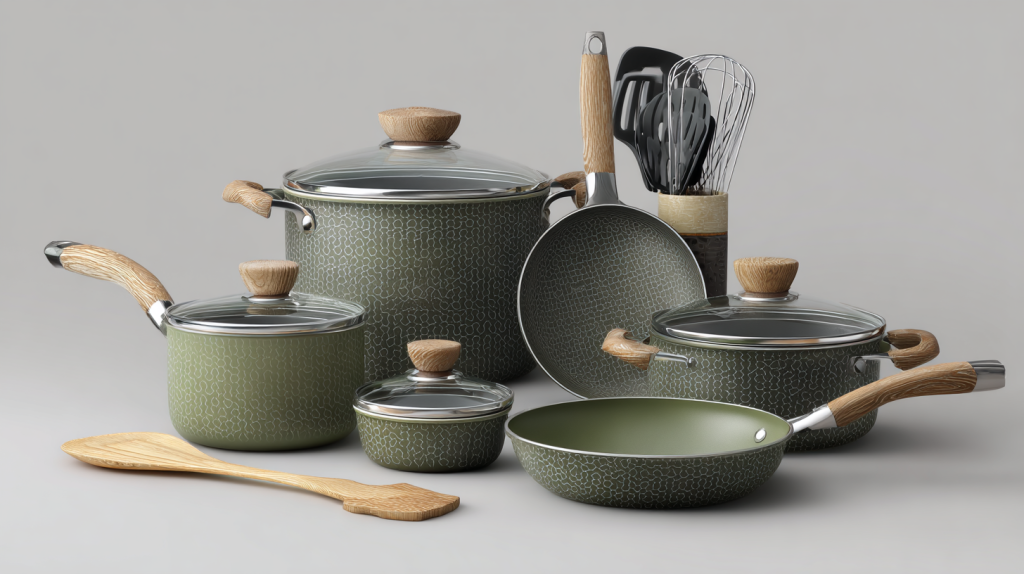
Cookware is one of those purchases where people either overthink it or don’t think about it enough. Some people research for weeks, reading about heat conductivity and cladding layers. Others grab whatever 15-piece set is on sale at Target and call it done. Both approaches miss the point. The right cookware depends on how you actually cook, what you cook most often, and how much maintenance you’re willing to deal with. A pan that’s perfect for one person is wrong for another.
The three main materials dominating the home cookware market are nonstick, stainless steel, and cast iron. Each has genuine strengths and real trade-offs. Understanding those differences before you buy saves you from ending up with a kitchen full of pans you don’t enjoy using.
Nonstick Cookware
Nonstick is the default choice for most home cooks because it solves the problem everyone hates most: food sticking to the pan. Eggs slide right off. Pancakes flip without tearing. Fish doesn’t leave half its skin welded to the cooking surface. Cleanup is a quick wipe with a sponge instead of 10 minutes of scrubbing. If your primary goal is convenience and easy cooking with minimal oil, nonstick delivers.
The coating on modern nonstick pans is typically either PTFE-based (the classic Teflon-style coating) or ceramic. PTFE coatings are the most effective at preventing sticking and generally last longer than ceramic coatings. The old health concerns about Teflon were related to PFOA, a chemical used in the manufacturing process that was phased out industry-wide in 2013. Current PTFE cookware doesn’t contain PFOA, and the coatings are considered safe at normal cooking temperatures. Problems only occur if you overheat an empty nonstick pan above 500 degrees, which releases fumes that can be harmful. Just don’t preheat nonstick pans on high heat without food in them and you’re fine.
Ceramic nonstick coatings appeal to people who want to avoid PTFE entirely. They work well when new but tend to lose their nonstick properties faster than PTFE coatings, sometimes within a year of regular use. If you go ceramic, expect to replace the pans more frequently.
The biggest drawback of nonstick cookware is that it doesn’t develop a good sear on meat. High-heat cooking techniques like searing a steak, caramelizing vegetables, or making a pan sauce require temperatures and techniques that nonstick pans aren’t designed for. The coating discourages the formation of fond, those brown bits that stick to the pan and form the flavor base for sauces and gravies. If you cook a lot of meat or love building pan sauces, nonstick will leave you wanting more.
Nonstick pans also have a limited lifespan regardless of how carefully you treat them. Even high-end nonstick coatings degrade over time with regular use. Plan on replacing nonstick pans every two to five years depending on quality and how often you use them. For this reason, spending $200 on a single nonstick skillet doesn’t make much financial sense. Mid-range options in the $30 to $60 range give you the same cooking performance and you won’t feel bad replacing them when the coating wears out.
Good options include the T-fal Professional Nonstick set, which has been a perennial recommendation for its combination of performance and price. The All-Clad HA1 Hard Anodized line offers a more premium build with heavier construction and better heat distribution. For ceramic nonstick, the GreenPan Valencia Pro and Caraway Home sets are popular choices, though be prepared for the coating to degrade faster than PTFE.
Stainless Steel Cookware
Stainless steel is what professional kitchens use, and for good reason. It’s durable, nonreactive with acidic foods like tomatoes and wine, can handle extremely high heat, and develops beautiful browning on proteins. When you see a recipe that says “sear the chicken until golden brown” or “deglaze the pan with wine,” stainless steel is the pan they’re talking about. That fond you build on the bottom of a stainless pan is pure flavor, and scraping it up with liquid to make a sauce is one of the most satisfying techniques in home cooking.
The trade-off is that food sticks to stainless steel. That’s not a defect, it’s the nature of the material. Learning to cook with stainless requires technique. You need to preheat the pan properly, use enough oil or fat, and let food develop a crust before trying to flip it. If you try to move a piece of chicken too early, it tears. If you wait until the sear is complete, it releases cleanly on its own. This learning curve frustrates people who are used to nonstick, but once you get the hang of it, stainless becomes incredibly rewarding to cook with.
Fully clad stainless steel, where layers of aluminum or copper are sandwiched between stainless steel on the inside and outside, provides the best heat distribution. Cheaper stainless pans that only have a disc of aluminum on the bottom don’t heat as evenly and develop hot spots. The difference in cooking performance between a fully clad pan and a disc-bottom pan is significant, so this is an area where spending more makes a real difference.
All-Clad D3 is the benchmark that every other stainless set is measured against. It’s fully clad, made in the USA, and will last a lifetime with proper care. It’s also expensive, usually $400 to $700 for a set. The Tramontina Tri-Ply Clad is the most commonly recommended budget alternative. It uses the same three-layer construction at roughly a third of the price, and in blind testing most home cooks can’t tell the difference in performance. Made in Brazil rather than the USA, it’s one of the best values in cookware at around $150 to $250 for a set.
Cuisinart Multiclad Pro is another solid mid-range option that regularly appears in top recommendations. It’s fully clad, dishwasher safe, oven safe to 550 degrees, and priced between the Tramontina and All-Clad.
Stainless steel pans are dishwasher safe but often clean up better with a quick scrub using Bar Keepers Friend, a powdered cleanser that removes stuck-on food and restores the shine. It takes about 30 seconds and keeps the pans looking new. If stainless steel maintenance sounds like too much work, you may be happier with nonstick for daily use and a single stainless skillet for when you want to sear and build sauces.
Cast Iron Cookware
Cast iron occupies a unique place in the cookware world because it’s simultaneously the most old-fashioned and the most beloved material. A well-seasoned cast iron skillet produces a sear that rivals a professional steakhouse, retains heat better than anything else on the market, goes from stovetop to oven seamlessly, and will outlast you. People cook on cast iron pans inherited from their grandparents. No other cookware can make that claim.
The weight is the first thing you notice. A 12-inch cast iron skillet weighs 8 to 10 pounds, which makes it significantly heavier than stainless or nonstick equivalents. If you have wrist or arm issues, this is a real consideration. Tossing vegetables or flipping food in a cast iron pan takes more effort than in a lighter pan.
Cast iron heats unevenly compared to clad stainless steel. The center of the pan directly over the burner gets much hotter than the edges. It compensates for this by retaining heat extremely well once it’s fully preheated, which is why it’s so effective for searing. The trick is to preheat it slowly over medium heat for five minutes rather than blasting it on high, which gives the entire surface time to come up to temperature.
Seasoning is the layer of polymerized oil that builds up on cast iron over time, creating a naturally nonstick surface. A well-seasoned cast iron pan will release eggs and fish nearly as cleanly as a nonstick pan. New cast iron pans come pre-seasoned from the factory, and the seasoning improves with regular use. The maintenance reputation of cast iron is overblown. You don’t need to baby it. Cook with it, clean it with hot water and a brush or scraper, dry it, and apply a thin layer of oil occasionally. That’s it. Despite the internet mythology, a little soap won’t destroy the seasoning on a well-maintained pan.
Lodge is the obvious choice for cast iron and has been for over a century. Their skillets, Dutch ovens, and griddles are made in the USA, affordable, and built to last literally forever. A Lodge 12-inch skillet costs about $30 to $40, making it one of the best values in all of cookware. For a smoother cooking surface, Le Creuset and Staub make enameled cast iron that doesn’t require seasoning and comes in a range of colors. Their Dutch ovens are considered the gold standard for braising, soups, stews, and bread baking. The prices are steep, often $250 to $400 for a Dutch oven, but the lifetime durability and performance justify it for serious home cooks.
What Most Home Cooks Actually Need
You don’t need a matching 15-piece set in one material. In fact, the best approach for most kitchens is a mix. Here’s what covers 95 percent of home cooking situations.
A 10 or 12-inch nonstick skillet for eggs, pancakes, fish, and anything delicate that tends to stick. This is your daily driver that you’ll use more than anything else. Spend $30 to $60 and replace it every few years when the coating wears out.
A 12-inch stainless steel skillet for searing meat, making pan sauces, and any high-heat cooking where you want browning and fond development. This is the pan that elevates your cooking from decent to impressive. Spend $50 to $150 on something fully clad and keep it for life.
A large stainless steel or cast iron Dutch oven for soups, stews, braises, chili, and bread baking. A 5 to 7-quart size handles most family cooking. Lodge, Le Creuset, or Staub are the top choices depending on budget.
A medium saucepan, 2 to 3 quarts, in stainless steel for rice, sauces, oatmeal, and reheating soups. This gets used quietly in the background of almost every dinner.
A large stockpot, 8 to 12 quarts, for boiling pasta, making large batches of soup or stock, and cooking corn on the cob. This doesn’t need to be fancy. Any decent stainless stockpot works.
That’s five pieces. Some people add a cast iron skillet as a sixth for weekend steaks and cornbread, and that’s a great addition at $35. With this setup you can cook virtually any recipe in any cookbook without feeling like you’re missing a tool. Everything else, the specialty pans, the matching lids, the egg poachers, and the wok that comes in the 15-piece set, is nice to have but not necessary.
The best cookware is the cookware you actually enjoy using. If stainless steel frustrates you and makes you avoid cooking, nonstick is the better choice for your kitchen even if stainless is technically “better.” If you love the ritual of cooking on cast iron and don’t mind the weight, lean into that. The pan that gets used every day is infinitely more valuable than the premium pan that stays in the cabinet because it’s too much hassle.