
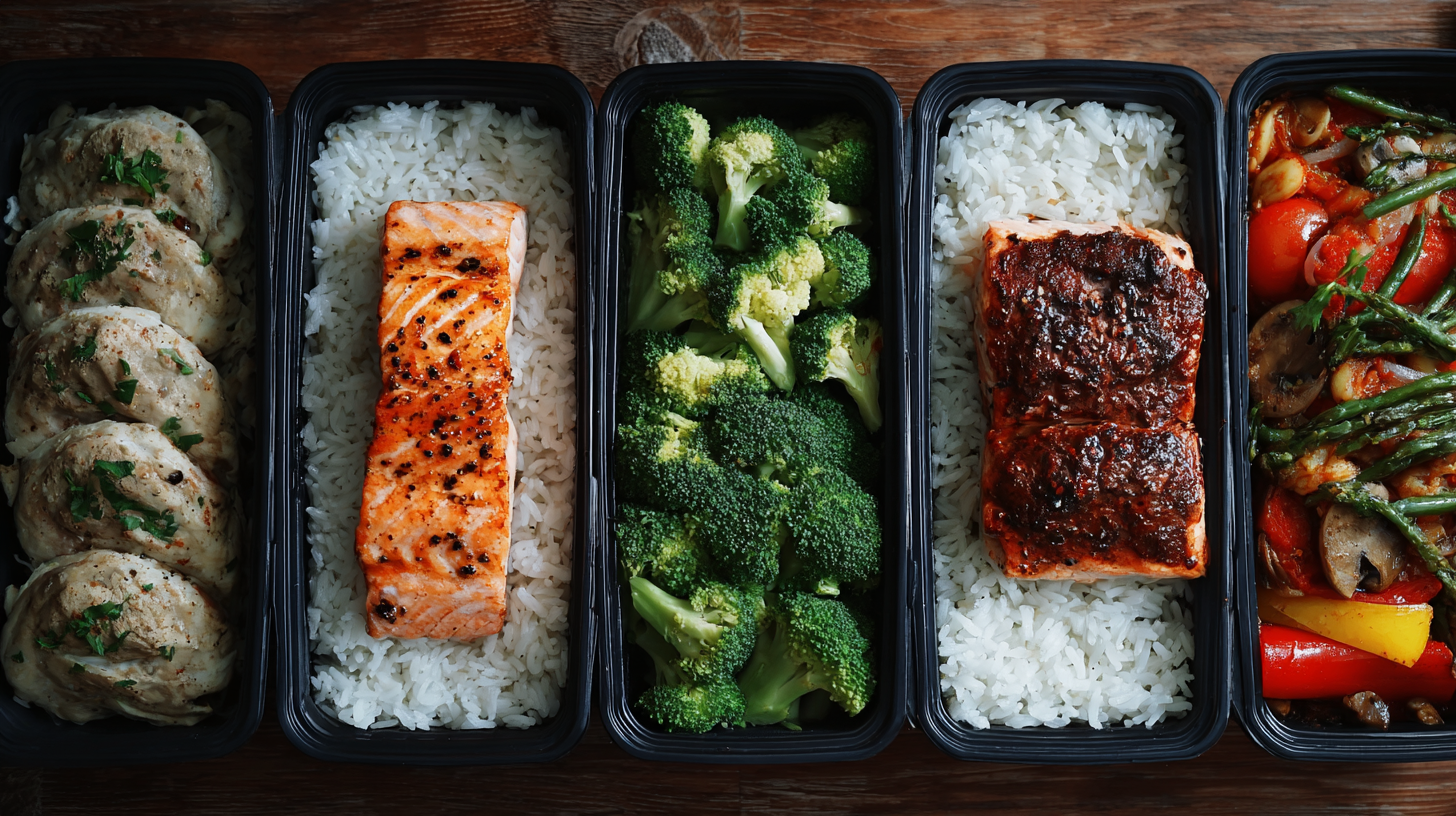
Meal prepping sounds great in theory. You spend a couple of hours on Sunday, fill your fridge with perfectly portioned containers, and coast through the week eating healthy homemade food without thinking about it. In practice, most people try it once, spend four hours making a huge mess, eat the same sad chicken and rice for three days, get bored, and never do it again.
The problem isn’t the concept. It’s the execution. Most meal prep guides are written by fitness influencers who cook like it’s their full-time job and have no problem eating identical meals five days in a row. For normal people with normal attention spans and normal tolerance for repetition, the approach needs to be different. Here’s how to actually pull off a full week of meals in under two hours without hating the process or the food.
The Mindset Shift: Prep Components, Not Meals
The biggest mistake people make is prepping five identical containers of the same finished meal. By Wednesday you’re dreading lunch because you’ve already eaten that exact combination twice and you’ve got two more staring at you from the fridge. The fix is to prep ingredients and components rather than complete meals. Cook a big batch of protein, a couple of grains or starches, and roast a sheet pan or two of vegetables. Then mix and match throughout the week to create different combinations that keep things interesting.
For example, if you prep grilled chicken, ground turkey, rice, roasted sweet potatoes, roasted broccoli, and sauteed peppers and onions, you can make chicken rice bowls one day, turkey and sweet potato plates the next, chicken wraps with peppers and onions after that, and a turkey stir-fry over rice later in the week. Same base ingredients, totally different meals each day. You’re eating variety without cooking multiple times.
Before You Start: Have a Loose Plan
You don’t need a detailed recipe for every meal, but you do need a rough idea of what you’re making. Spend five minutes before your prep session deciding on two proteins, one or two grains or starches, and three or four vegetables. Check what you already have in the fridge and pantry so you’re not buying duplicates. Write a quick grocery list of what you need and do one focused shopping trip.
A typical week might look like this: chicken thighs and ground beef for protein, jasmine rice and pasta for starch, and broccoli, bell peppers, zucchini, and sweet potatoes for vegetables. With those basics plus a few sauces and seasonings, you can build a dozen different meals throughout the week. Keep it simple. The goal is efficiency, not culinary achievement.
The Two-Hour Game Plan
The key to staying under two hours is running everything in parallel rather than cooking one thing at a time. Your oven, stovetop, and rice cooker or instant pot should all be working simultaneously. Here’s a general flow that works for most kitchens.
Start by preheating your oven to 400 degrees. While it heats up, season your proteins. Chicken thighs can go on a sheet pan with olive oil, salt, pepper, garlic powder, and whatever other spices you like. Ground beef or turkey goes into a skillet on the stovetop with seasoning. Get both of those cooking at the same time.
While the protein is working, chop your vegetables. Cut everything into roughly similar-sized pieces so they cook evenly. Toss them in olive oil and seasoning, spread them on a sheet pan, and get them into the oven alongside or after the chicken. Most vegetables roast in 20 to 25 minutes at 400 degrees. Sweet potatoes take a bit longer if they’re in larger chunks, so either cut them smaller or put them in first.
Start your rice or grain while the oven does its thing. A rice cooker makes this completely hands-off. If you’re doing pasta, boil the water and cook it while you’re waiting on other things to finish. Quinoa, farro, and couscous all work great for meal prep because they hold up well in the fridge for days without getting mushy.
While things are in the oven and on the stove, use the downtime to prep anything that doesn’t need cooking. Wash and chop salad greens. Slice avocados (toss them in lemon juice to keep them from browning). Portion out snacks. Make a quick sauce or dressing. This is dead time that most people waste scrolling their phone, but using it for cold prep is what keeps the whole session under two hours.
Storage and Shelf Life
Invest in a set of glass containers with locking lids. They last forever, don’t stain or absorb smells like plastic, and go straight from the fridge to the microwave. Get a mix of sizes: larger ones for full meals and smaller ones for sides, sauces, and snacks.
Store proteins, grains, and vegetables separately rather than all together in one container. This prevents everything from getting soggy and gives you the flexibility to mix and match throughout the week. When it’s time to eat, just grab one scoop from each container and assemble your plate.
Most cooked proteins and grains keep well in the fridge for four to five days. Roasted vegetables hold up for about three to four days before the texture starts to go. If you’re prepping for a full seven days, cook enough protein and grain for the whole week but split your vegetable prep. Roast half on Sunday and the other half on Wednesday evening, which takes maybe 20 minutes and keeps the second half of the week tasting fresh.
You can also freeze portions. Cooked chicken, ground meat, rice, and most soups and stews freeze beautifully for up to three months. Having a few frozen meals in reserve means you always have a backup even on weeks when you skip your prep session.
Sauces Change Everything
This is the secret weapon that turns repetitive meal prep into something you actually look forward to eating. The same chicken and rice tastes completely different depending on whether you put teriyaki sauce on it, buffalo sauce, pesto, salsa verde, or a tahini drizzle. Having three or four sauces in the fridge transforms a limited set of ingredients into what feels like a different meal every day.
You can buy sauces or make them. Store-bought teriyaki, sriracha mayo, chimichurri, pesto, and tzatziki all work great and save time. If you want to make your own, a simple vinaigrette takes two minutes, a peanut sauce takes three, and both keep in the fridge for a week or more. Rotate your sauces every couple of weeks and your meal prep will never feel monotonous.
Breakfast and Snacks
Most meal prep advice focuses on lunch and dinner, but prepping breakfast and snacks is where you save the most willpower during the week. Mornings are when people are most likely to grab something unhealthy because they’re rushed and haven’t made a decision yet.
Overnight oats are the ultimate prep-ahead breakfast. Mix oats, milk or yogurt, chia seeds, and whatever toppings you like in a jar, stick it in the fridge, and grab it on your way out the door. Five jars take about ten minutes to assemble and you’ve got breakfast handled for the workweek.
Egg muffins are another solid option. Whisk a dozen eggs with chopped vegetables, cheese, and cooked sausage or bacon, pour the mixture into a muffin tin, and bake for 20 minutes. You get 12 portable, protein-packed breakfast servings that reheat in 30 seconds. They keep in the fridge for five days or freeze well for longer storage.
For snacks, portion out nuts, trail mix, or hummus with cut vegetables into small containers. Having grab-and-go snacks ready prevents the 3pm vending machine run or the handful-of-chips-turning-into-half-the-bag situation.
Common Mistakes to Avoid
Cooking too many different things is the fastest way to blow past two hours. Stick to two proteins and three or four vegetables max. You’re prepping for convenience, not hosting a dinner party.
Not seasoning enough is why most meal prep tastes bland. When you’re cooking large batches, you need more seasoning than you think. Taste as you go and don’t be afraid of salt, acid (lemon juice, vinegar), and fat (olive oil, butter). These are what make food taste good, and underseasoned meal prep is the main reason people quit after one week.
Trying to prep every single meal for the entire week is overkill for most people. Prep lunches and a couple of dinners, and leave some nights open for cooking something fresh, eating leftovers, or going out. The goal is to eliminate the daily stress of figuring out what to eat, not to turn your entire food life into a rigid system.
Forgetting about variety week to week is how prep burnout happens. Rotate your proteins, change up your vegetables seasonally, and try a new sauce or seasoning blend every couple of weeks. The basic framework stays the same but the flavors keep evolving.
Making It Stick
Pick one day and one time and make it your prep window. Most people use Sunday afternoon, but Saturday or even a weeknight works if that fits your schedule better. Block it off like any other appointment. Put on a podcast or some music, pour a drink, and treat it as a low-key ritual rather than a chore. Once you’ve done it four or five times, the process becomes automatic. You’ll know your go-to proteins, your favorite sheet pan vegetable combos, and exactly how long everything takes. What started as a two-hour project will probably shrink to 90 minutes as you get more efficient. And when you open the fridge on a Tuesday night and dinner is already waiting for you, you’ll wonder why you didn’t start doing this sooner.