


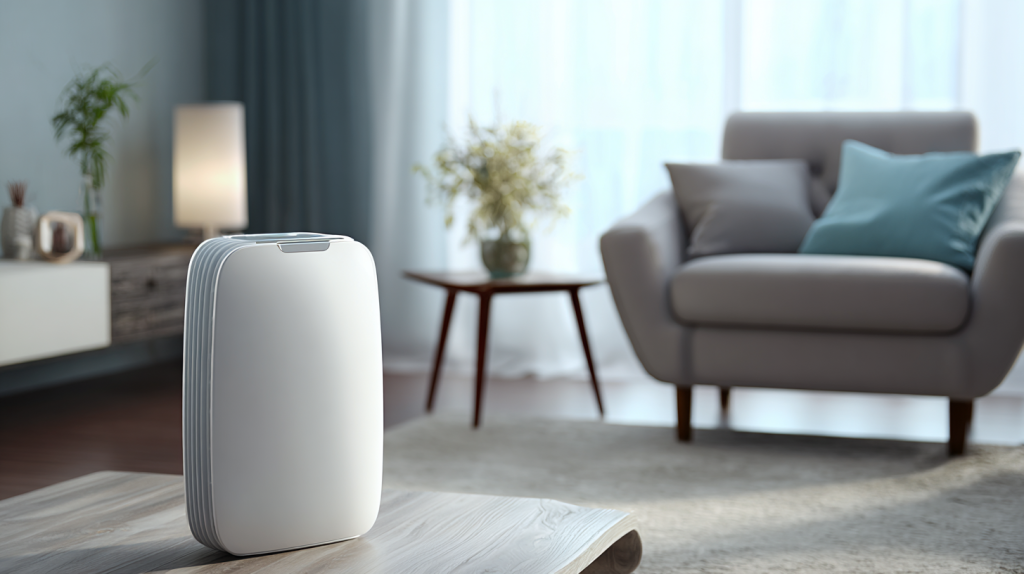
If you deal with allergies, you already know the basics. Vacuum more, wash your sheets in hot water, keep the windows closed during pollen season. But even with all of that, you can still wake up congested and spend the day sneezing because the air inside your house is full of invisible triggers you can’t do much about without mechanical help. According to the EPA, indoor air can be two to five times more polluted than outdoor air, and since most of us spend roughly 90% of our time indoors, that’s a problem worth solving.
An air purifier won’t cure your allergies. But a good one running in the right room can meaningfully reduce airborne pollen, dust mite debris, pet dander, and mold spores. The difference is noticeable, especially at night. Here’s what to look for and which models are worth the money.
What Actually Matters in an Air Purifier
Before looking at specific products, it helps to understand the three things that separate an effective air purifier from one that just blows air around.
First is the filter type. You want True HEPA, specifically rated H13 or higher. A True HEPA filter captures 99.97% of particles as small as 0.3 microns, which covers all the common allergy triggers: pollen runs 10 to 100 microns, pet dander is 2.5 to 10 microns, dust mite debris is 0.5 to 50 microns, and mold spores are 1 to 100 microns. If a product says “HEPA-type” or “HEPA-style” instead of True HEPA, skip it. Those labels mean it doesn’t actually meet the standard, and the filtration performance will be significantly worse.
Second is CADR, which stands for Clean Air Delivery Rate. This measures how many cubic feet of air the purifier can clean per minute. A higher CADR means the purifier cycles more air faster, which means fewer allergens floating around at any given time. The general rule is that your purifier’s CADR should be at least two-thirds of your room’s square footage. So for a 300 square foot bedroom, you want a CADR of at least 200.
Third is noise level. If you’re running an air purifier in your bedroom, which is where allergy sufferers get the most benefit since you spend seven to nine hours there, it needs to be quiet enough to sleep through. Look for models that operate under 50 decibels on lower settings, and ideally ones with a dedicated sleep or night mode.
Coway Airmega AP-1512HH (Mighty)
The Coway Mighty has been a top recommendation for allergy sufferers for years, and it still holds up well. It uses a True HEPA filter paired with an activated carbon filter for odors, plus a washable pre-filter that catches larger particles like pet hair before they reach the main filter. It covers rooms up to about 361 square feet and has a real-time air quality indicator light that shows you what’s happening in your air at a glance.
The auto mode adjusts fan speed based on detected air quality, so it ramps up when something triggers it and drops back down when the air cleans up. At lower speeds it’s very quiet, making it a good bedroom option. The filter lasts about 12 months under normal use, and replacements run around $40 to $50. For the price, usually around $150 to $180, it’s one of the best values in the category.
Blueair Blue Pure 311i+ Max
Blueair uses a technology they call HEPASilent, which combines traditional mechanical filtration with an electrostatic charge to capture particles more efficiently at lower fan speeds. The practical benefit is that it cleans air effectively while running quieter and using less energy than a standard HEPA setup.
The 311i+ Max covers up to 525 square feet and has strong CADR numbers across pollen, dust, and smoke. It connects to an app for remote control and has an auto mode driven by a built-in air quality sensor. The design is also cleaner than most air purifiers, which tend to look like medical equipment. This one actually blends into a room. Filter replacements are recommended every six months or so, and the unit tracks actual usage to alert you when it’s time. Pricing sits around $170 to $230 depending on where you buy it.
Levoit Core 600S
If you need to cover a larger room, the Levoit Core 600S handles spaces up to 635 square feet. It uses a three-stage filtration system with a pre-filter, True HEPA filter, and activated carbon filter. The smart features are solid: app control, scheduling, auto mode with a laser air quality sensor, and compatibility with Alexa and Google Assistant.
What makes the Levoit line popular is the combination of strong performance and reasonable pricing. The 600S usually sells for around $200 to $250, which is significantly less than premium brands like Dyson for comparable room coverage. It does run a bit louder on higher settings, but on auto or sleep mode it’s manageable for a bedroom. Filter replacements cost around $40 and last roughly six to eight months.
Levoit Core 300S (Budget Pick)
If you want something effective for a smaller room without spending much, the Levoit Core 300S covers up to about 219 square feet and runs around $100 to $130. It’s a compact unit with True HEPA filtration, app control, and a sleep mode that drops noise to a whisper. For a bedroom or small office, it does the job well.
The filters last about six to eight months and replacements are cheap, around $20 to $25. It doesn’t have the CADR to handle a large living room, but for a dedicated bedroom purifier at this price, it’s hard to complain.
Honeywell HPA300
The Honeywell HPA300 is less flashy than the smart models but it’s a workhorse. It covers large rooms up to 465 square feet and moves a lot of air with powerful fan speeds. It uses True HEPA filtration and has a turbo mode for when pollen or smoke levels spike. The trade-off is that it’s louder than most competitors, especially on higher settings, so it’s better suited for a living room or common area than a bedroom.
Pricing hovers around $200 to $250, and replacement filters are widely available. This is a good option if you want straightforward, high-volume air cleaning without dealing with apps or smart features.
Tips That Make a Real Difference
Where you put the purifier matters. The bedroom should be your first priority because of the sheer amount of time you spend there. If you can only afford one unit, that’s where it goes. Place it a few feet away from the bed, not behind furniture or in a corner where airflow gets blocked.
Run it continuously. Allergens don’t take breaks, and neither should your purifier. Auto mode handles this well by running on low when air is clean and ramping up when particles spike, so you’re not burning excessive energy. Most HEPA purifiers cost somewhere between $3 and $10 a month in electricity when running 24/7.
Change your filters on schedule. A clogged filter doesn’t just reduce performance, it can actually push particles back into the air. Most models need a filter swap every six to twelve months, and running in a home with pets or high pollen counts will push you toward the shorter end of that range.
An air purifier works best as part of a system, not as a standalone fix. Vacuum regularly with a HEPA-filter vacuum to remove settled allergens from floors and furniture. Wash bedding weekly in hot water to kill dust mites. Keep indoor humidity between 40 and 50 percent, since dust mites and mold both thrive in damper conditions. The purifier handles what’s airborne, but reducing the source load means it has less work to do and your air stays cleaner overall.
Most people notice a difference within 24 to 48 hours of running a properly sized unit in an enclosed room. It’s not magic, but waking up without a stuffed nose and getting through the day without reaching for allergy meds every few hours is a pretty compelling result.