


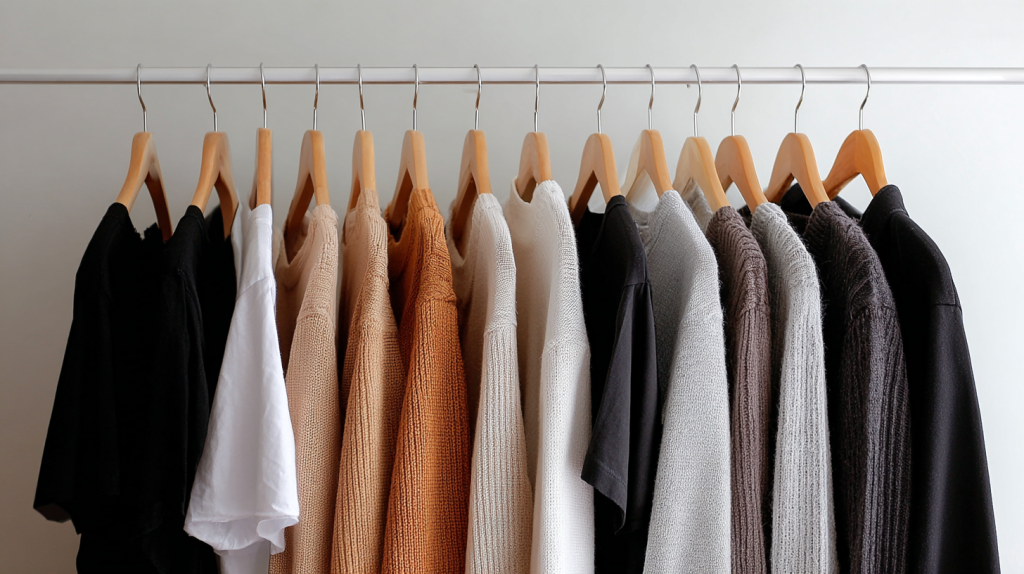
Most people don’t have a clothing problem. They have a coordination problem. The closet is full but nothing goes together, half of it doesn’t fit right, and every morning turns into a frustrating guessing game. That’s the whole reason the capsule wardrobe concept took off, and it’s only gotten more popular heading into 2026.
A minimalist wardrobe isn’t about depriving yourself or wearing the same outfit every single day. It’s about owning fewer pieces that actually work together so you can get dressed in two minutes and feel good about it. And despite what some fashion blogs will tell you, you don’t need to spend thousands of dollars replacing everything at once. You can do this on a tight budget if you’re smart about it.
Start With What You Already Own
Before you buy a single thing, pull everything out of your closet and sort it into three piles: stuff you wear all the time, stuff you haven’t touched in six months, and stuff that doesn’t fit or is damaged beyond repair. Be honest with yourself here. That shirt you’re keeping because you spent $60 on it three years ago but never wear? It’s dead weight.
Once you’ve purged the obvious stuff, look at what’s left. You probably already own a handful of solid basics that can form the foundation of a capsule wardrobe. A pair of dark jeans that fit well, a decent white tee, maybe a neutral sweater or blazer. These are your starting pieces, and building around what you already have saves you from spending money you don’t need to spend.
Pick a Color Palette and Stick to It
This is the single most important step and the one most people skip. If everything in your wardrobe lives within the same color family, every piece automatically works with every other piece. That’s the whole trick.
The easiest approach is to pick two or three neutrals as your base. Black, white, navy, gray, and beige are the classic choices because they mix effortlessly. Then add one or two accent colors if you want some personality. Maybe olive green or burgundy or a muted blue. The key is that your accent colors still play nice with your neutrals.
When you shop this way, you stop buying random pieces that only go with one specific outfit. Every new item you bring in immediately multiplies your outfit options because it pairs with almost everything else in the closet.
Know Your Core Pieces
A solid minimalist wardrobe for most people lands somewhere between 25 and 35 pieces total, not counting underwear and workout clothes. That sounds small, but when everything coordinates, you end up with way more outfit combinations than a closet stuffed with 100 random items.
Here’s roughly what you’re working with. A few quality tees in neutral colors. A button down or two. A couple of sweaters or knits for layering. Two or three pairs of pants or jeans in different cuts. A versatile jacket or blazer. Maybe a coat for colder months. And then a few pairs of shoes that cover your bases, something casual like white sneakers, something a little dressier like loafers or boots, and a pair of sandals if you live somewhere warm.
You don’t need to hit this number right away. Most people who do this well build their capsule over several months, swapping out one piece at a time rather than doing a complete overhaul in a single weekend.
Where to Shop Without Blowing Your Budget
You don’t need to buy from expensive minimalist brands to pull this off. Uniqlo is probably the best value play for basics right now. Their tees, jeans, and outerwear are well made for the price, and they lean heavily into the kind of clean, simple styles that work perfectly in a capsule. Target’s A New Day and Goodfellow lines are solid too, especially for everyday staples.
Thrift stores and resale apps like ThredUp and Poshmark are goldmines if you’re patient. You can find quality pieces from brands like Everlane, Madewell, and J.Crew for a fraction of the original price. The trick with thrifting is to go in with a specific list. If you need dark wash jeans and a navy blazer, search for those exact things. Don’t browse aimlessly or you’ll end up buying stuff you don’t need, which defeats the entire purpose.
Old Navy and H&M work fine for the cheapest basics like plain tees and simple layering pieces, but don’t expect those to last more than a season or two. For items you’ll wear constantly, like jeans and outerwear, it’s worth spending a little more to get something that holds up. Cost per wear is the real metric. A $15 tee you wear twice costs more than a $40 tee you wear fifty times.
The Replacement Mindset
Once your capsule is in place, the goal shifts from shopping for new stuff to replacing things as they wear out. When your white tee starts looking dingy after six months, you replace it with another white tee. You’re not adding to the collection, you’re maintaining it. This is where the real savings kick in, because impulse purchases basically disappear. If it doesn’t fit your palette and fill a specific role, it doesn’t come home with you.
Some people also follow a one-in-one-out rule. Every time a new piece enters the closet, an old one leaves. It keeps the wardrobe from slowly creeping back up to the bloated mess you started with.
Give It Time
The biggest mistake people make is trying to build the perfect capsule wardrobe in a single shopping trip. It doesn’t work like that. You’ll figure out what’s missing after living with your initial setup for a few weeks. Maybe you realize you need another pair of pants in a lighter color, or that you’re reaching for a cardigan you don’t have yet. Let those gaps reveal themselves naturally and fill them one at a time. The wardrobe gets better with each small upgrade, and within a few months you’ll have a closet that actually makes your mornings easier.